How to Govern MCP Servers in an Enterprise
Introduction
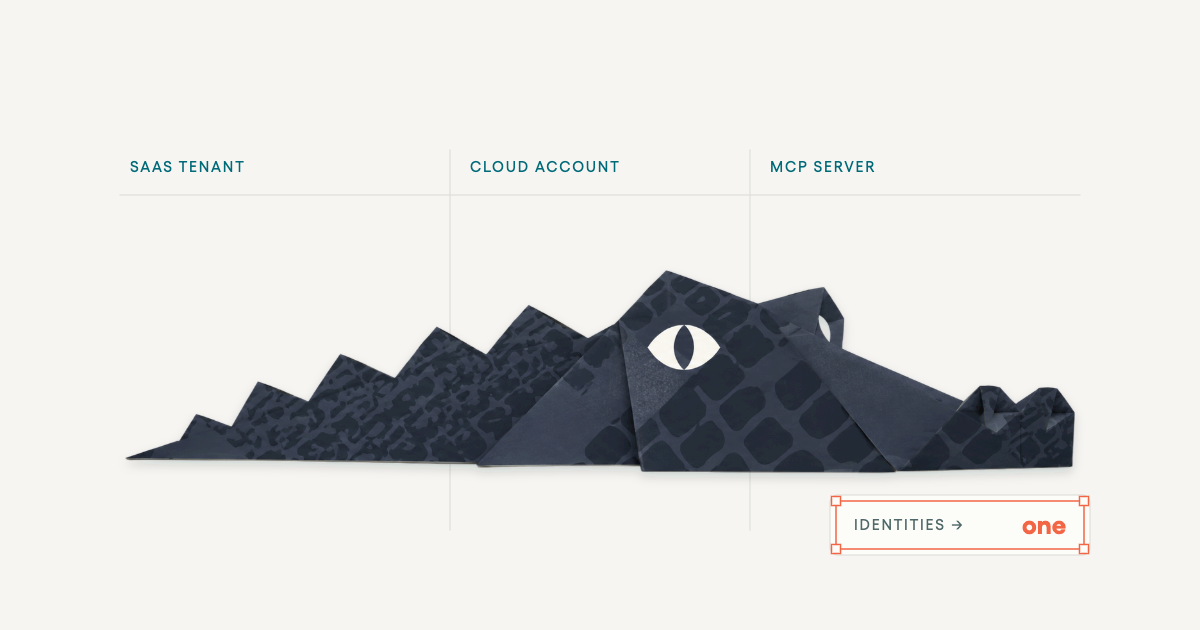
MCP server credential sprawl risks come from one pattern: each server holds tokens to downstream systems, and those tokens are often long-lived and shared. Individual teams spin servers up on their own, so the result is standing access with no owner.
You govern it by treating each server and its tokens as identities, with an owner, scoped access, usage review and an end date.
That is a different job from MCP server security as a threat list. A threat list tells you what an attacker could do, while governance tells you who answers for each server.
Oak, the AI-native identity operating system, governs human, machine, and AI agent identities on one live graph. MCP is one of the agent surfaces Oak covers.
Key takeaways
- Each MCP server is a machine identity, and its tokens are entitlements.
- Sprawl comes from long-lived, shared tokens on servers nobody registered.
- Govern servers through a lifecycle: inventory, owner, scope, usage review, expiry, retirement.
- Oak maps each agent's owner and permissions to expose MCP server credential sprawl risks.
What an MCP server is, and why its tokens matter
The Model Context Protocol (MCP) is an open-source standard for connecting AI applications to external systems.
An MCP server exposes tools to an AI agent, then calls downstream systems with credentials it holds. When an agent asks for a ticket, a file or a query result, the server makes that call under its own token.
That makes the server a machine identity, and each token it holds an entitlement. MCP server security starts by treating the server as an identity you can name, own and review.
The token is the part that matters to you. It decides what the agent can reach, and it usually outlives the conversation that used it.
Seen this way, an MCP server belongs in the same governance program as your service accounts. It needs an owner, a scope, a review and an end date, like any other identity with access to production data.
How credentials sprawl across MCP servers
Credential sprawl is the growth of tokens faster than anyone can track who holds them, what they reach and when they expire. The 2026 Identity Security Landscape, a survey of 2,930 security decision-makers, found 109 machine identities per human, and 40% of machine identities have access to organizational data.
Each MCP server you add joins that population with credentials of its own. Three patterns drive the sprawl.
Each server holds its own downstream tokens
An MCP server stores a token for each system it fronts. A server that fronts several systems can hold one credential for each of them.
Count your exposure as servers multiplied by the systems each one fronts. The number you get is the number of entitlements someone should be able to explain.
Long-lived and shared tokens
Static API keys and personal access tokens are typically set once at setup and never rotated. Teams often share one token across several users and agents to keep the server simple.
A shared token removes per-user attribution. When an action lands in a downstream system, you see the server's token, never the person or agent that triggered it.
That is a governance gap first. Nobody can certify access they cannot attribute to a requester.
Servers spun up by individual teams
Teams often stand up MCP servers outside any registration path, because building one often needs no approval. Builders typically wire those servers on their own credentials.
An agent on its builder's credentials reaches everything the builder can. When that builder holds admin rights on a sensitive system, so does the agent.
Oak discovers SaaS, homegrown, shadow and custom agents. It maps each agent's accountable human owner, effective permissions, tool usage and who each agent acts on behalf of.
The risks credential sprawl creates
Sprawl turns into risk in three ways. Each one is about what a token can reach once it exists.
- Standing access: tokens stay valid around the clock, so access exists whether or not any agent needs it today.
- No owner: servers and agents outlive their creators with no owner, reviewer or approver.
- Borrowed reach: an agent acting on behalf of a user can reach more than that user could, through the server's token.
Effective access is what an identity can actually reach once nested groups, inherited admin and impersonation chains are counted. Borrowed reach is an effective access problem, because the user's declared rights and the agent's real reach no longer match.
Third-party MCP servers raise the stakes. In the Verizon 2026 DBIR, credential abuse appears somewhere in the attack chain of 39% of breaches, and a third party was involved in 48%, a 60% increase on the previous year.
A third-party server holding a long-lived token to your systems sits on both of those paths. The governance question is whether that token should exist at all.
Oak flags third-party integrations with standing tokens and unowned agents, the two findings that put a server on both paths.
Six controls to govern MCP servers as identities
MCP server governance works when the controls follow the identity lifecycle. A server is found, owned, scoped, reviewed, rotated and retired.
Hand these six controls to the team that runs your servers. Each one produces evidence you can show an auditor or a board.
Inventory every server
Discover every server your SaaS, homegrown, shadow and custom agents call, including the ones platform engineering never registered. For each server, record the downstream systems it calls and the credential it holds for each.
That record is the base layer of AI agent governance. You cannot assign, scope or revoke a token you never found.
Assign an accountable owner
Give each server a named human or team owner who answers for its tokens. Record the owner next to the server in the same inventory.
Treat an unowned server as an open finding until someone accepts it. Ownership is what turns a review request into a decision someone actually makes.
Scope each token
Issue one token per server per downstream system, scoped to the tools that server exposes. Token passthrough is explicitly forbidden in the MCP authorization specification, per MCP security best practices.
The guidance recommends a minimal initial scope set with incremental elevation. Map each scope to a privilege level (admin, write or read) combined with the sensitivity of the resource it touches.
A read scope on a payroll database outranks a write scope on a test wiki. Ranking tokens by privilege level and sensitivity tells you which ones to cut first.
Review tool access against actual usage
Compare the tools and scopes each server was granted with the tools agents actually call. A server granted many tools that calls only a few is carrying standing access it does not use.
Oak gives each agent continuous reviews driven by its own risk profile, not a fixed calendar. It continuously correlates what every identity can access with what it actually uses, then routes risk-prioritized decisions to the right reviewers.
The platform checks access against actual usage and removes excessive permissions at the source, taking each finding from visibility to action.
Expire and rotate tokens
Set an expiry on each token when you issue it, and rotate the ones that must persist on a defined schedule. Where a tool is used rarely, grant just-in-time access for the task and let the token lapse afterward.
Standing privilege reduction is the goal here. You want fewer tokens that stay valid while nobody is using them.
Remove access at retirement
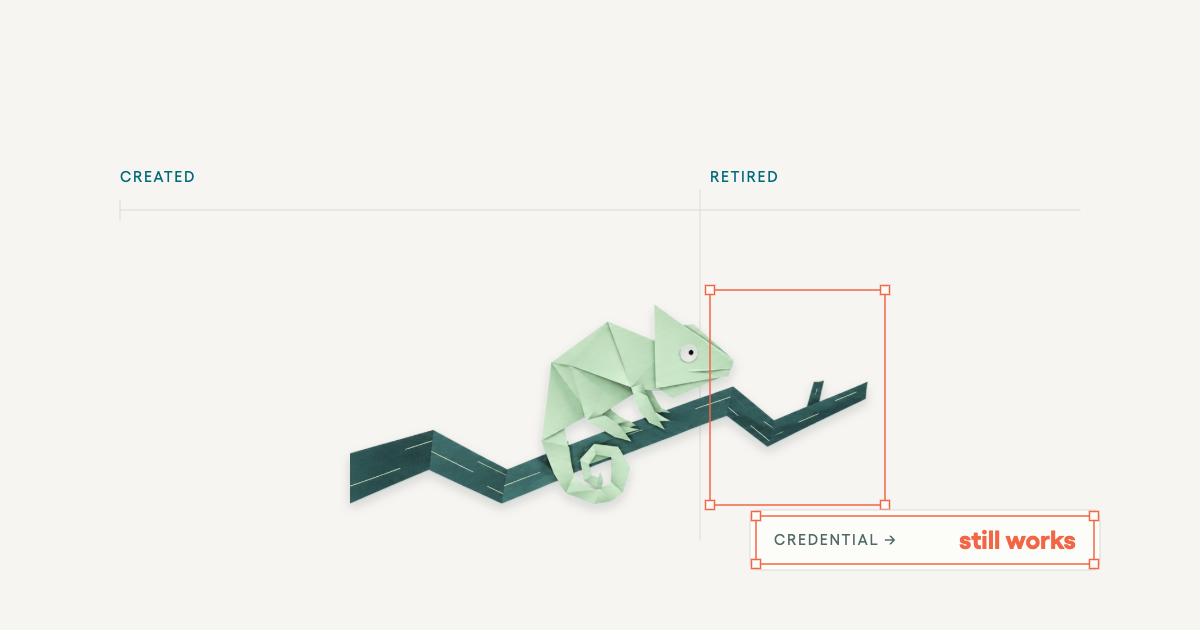
Retiring a server means revoking each token it held at the downstream system that issued it. Shutting the server down leaves those tokens valid wherever they were stored.
When an owner leaves or changes roles, reassign the server before their account closes. Joiner-mover-leaver (JML) events trigger event-driven micro-certifications. A departure then opens a review of each server the person owned.
Risk against control: a quick reference for MCP server credential sprawl risks
Use this table to check each risk against the control that closes it and the evidence that proves it.
| Risk | Control | Evidence to show |
|---|---|---|
| Unregistered servers | Inventory each server | Server list with downstream systems and credentials |
| Unowned servers and tokens | Assign an accountable owner | Named owner per server |
| Broad or passed-through tokens | Scope each token | Scopes by privilege level and resource sensitivity |
| Granted tools never used | Review access against usage | Usage comparison and removal record |
| Long-lived static keys | Expire, rotate and grant just in time | Expiry date on each token |
| Tokens outliving the server | Revoke at retirement | Revocation record at each downstream system |
| Agent reach beyond the user | Map who each agent acts for | On-behalf-of mapping per agent |
Start with the rows where your team has no evidence today. Those rows are where an auditor's first question will land.
Already running an IGA? Oak connects to the IGA you already run and covers what it cannot reach, including the MCP servers and AI agents it never saw.
Its ConnectAny reaches on-prem, homegrown and custom systems, so servers fronting those systems land in the same graph as the rest of your identities.
Conclusion
MCP server credential sprawl risks shrink when each server is an identity with a lifecycle you can prove. For you as CISO or IAM lead, that means a direct board answer: each server's owner, its tokens' reach and its end date.
Oak remediates from the source the moment an identity deviates. Your AI platform team keeps shipping servers, and your governance keeps pace with them.
Get a demo to see how Oak maps the owner, permissions and tool usage behind each MCP server.
Frequently asked questions
Are MCP servers safe to run in an enterprise, given credential sprawl risks?
MCP servers can be run in an enterprise when governance carries the load, because owners, scoped tokens and expiry decide how much each one exposes. Oak covers MCP as one agent surface, so a server's credentials sit in the same graph as your human, machine, and AI agent identities.
Who should own an MCP server's credentials?
An MCP server's credentials should be owned by a named person or team accountable for the server, not its last developer. Oak maps each agent's accountable human owner, so a review request reaches the person who answers for that server and its tokens.
How do MCP server credential sprawl risks differ from service account sprawl?
MCP server credential sprawl risks differ from service account sprawl because agents act on behalf of users and choose tools at run time. A service account runs a fixed job; an agent's reach shifts per request, so Oak maps its tool usage and who it acts for.
How often should MCP server credentials and tool access be reviewed?
MCP server credentials and tool access should be reviewed continuously, with priority set by each agent's risk profile instead of a calendar date. Oak drives each agent's reviews from its own risk profile, so access is checked against actual usage rather than on a fixed date.
What happens to MCP server credentials when a project ends?
MCP server credentials stay valid after a project ends unless someone revokes them at each downstream system that issued them. Oak flags unowned agents and third-party integrations with standing tokens, the findings a finished project tends to leave behind.
Discover related posts