
Build or Buy Identity Governance for AI Agents
Introduction
When teams weigh build versus buy for AI agent identity governance, the answer is usually to build the agents and buy the governance around them. A homegrown approach handles registration and secrets well enough.
It breaks on finding agents nobody registered, proving who owns them, and showing what they can actually reach. An agent running on its builder's credentials reaches everything the builder can.
Machine identities, agents among them, keep multiplying. The 2026 Identity Security Landscape survey counted 109 machine identities per human, and 40% of machine identities already have access to organizational data.
Oak, the AI-native identity operating system, governs those agent identities beside the IGA you already run.
Key takeaways
- Build your agents, and buy the identity governance layer around them.
- Homegrown builds miss shadow agents, effective permissions, and who an agent acts for.
- Agent reviews should follow each agent's own risk, not a calendar.
- Removing excessive permissions at the source beats a ticket nobody closes.
- Oak brings AI agent identity governance into the same graph as people.
What a homegrown agent governance build gives you
A typical build has four parts. A registration script, a table of agents, identity provider groups or service principals for scoping, and a secrets manager holding tokens and keys.
That stack does real work. It stores and rotates credentials, records an owner at creation, and produces an export when an auditor asks.
The cost sits in the collection work. Every agent surface you want to see, whether AgentCore, OAuth apps, service principals, or MCP, needs its own collection path, and each one changes on its vendor's schedule.
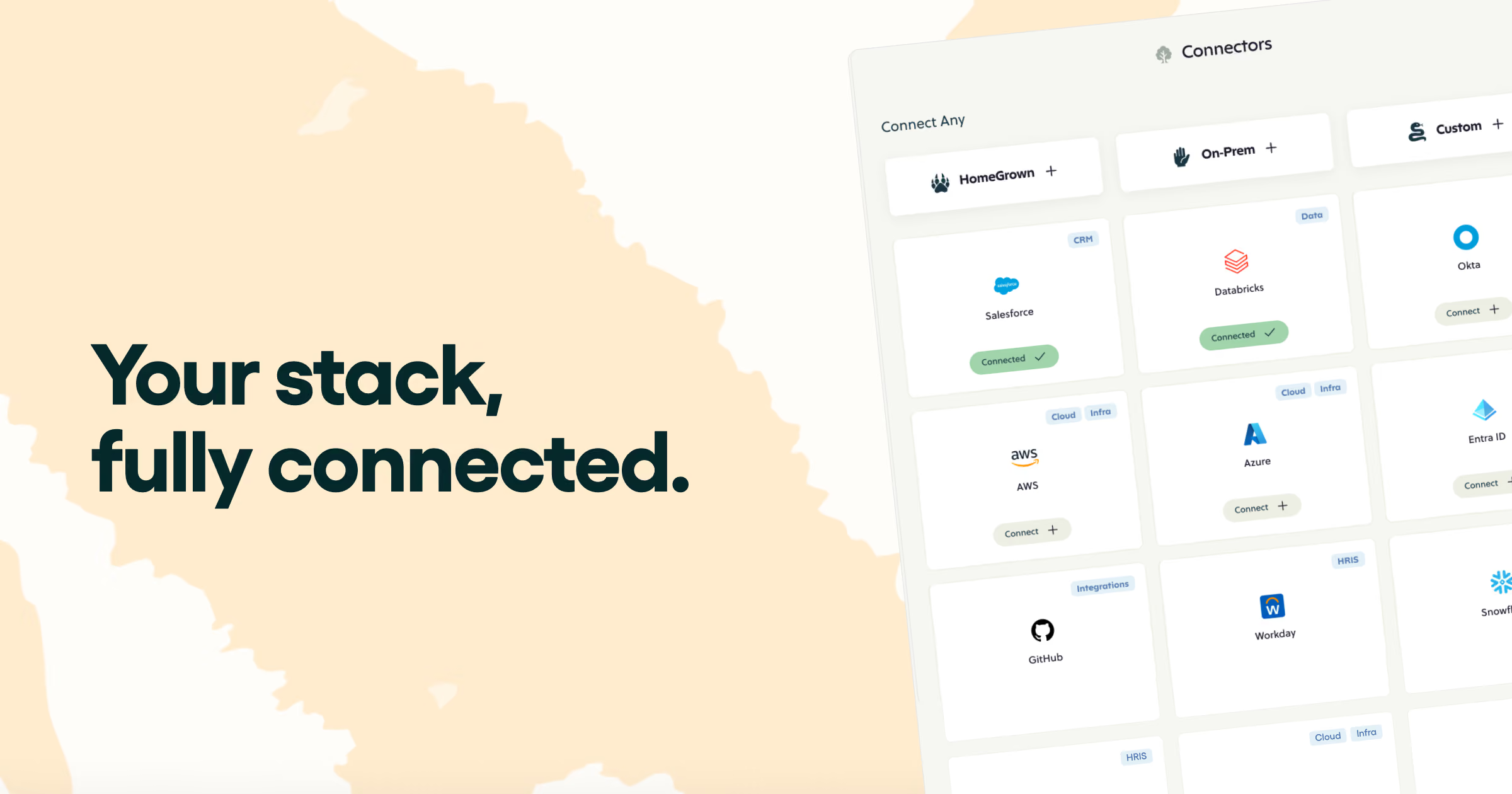
Oak's ConnectAny takes that work on, reaching cloud, SaaS, on-prem, homegrown, and agent platforms through pre-built and custom connectors, direct API and database connections, file upload, and an on-prem agent.
Six places a homegrown build breaks
Discovery of shadow agents
A registry only contains what someone chose to register. An agent a data scientist spun up against a production account last week is not in it.
Discovery has to run from the source systems, not from a form, and cover SaaS, homegrown, shadow, and custom agents.
An accountable human owner
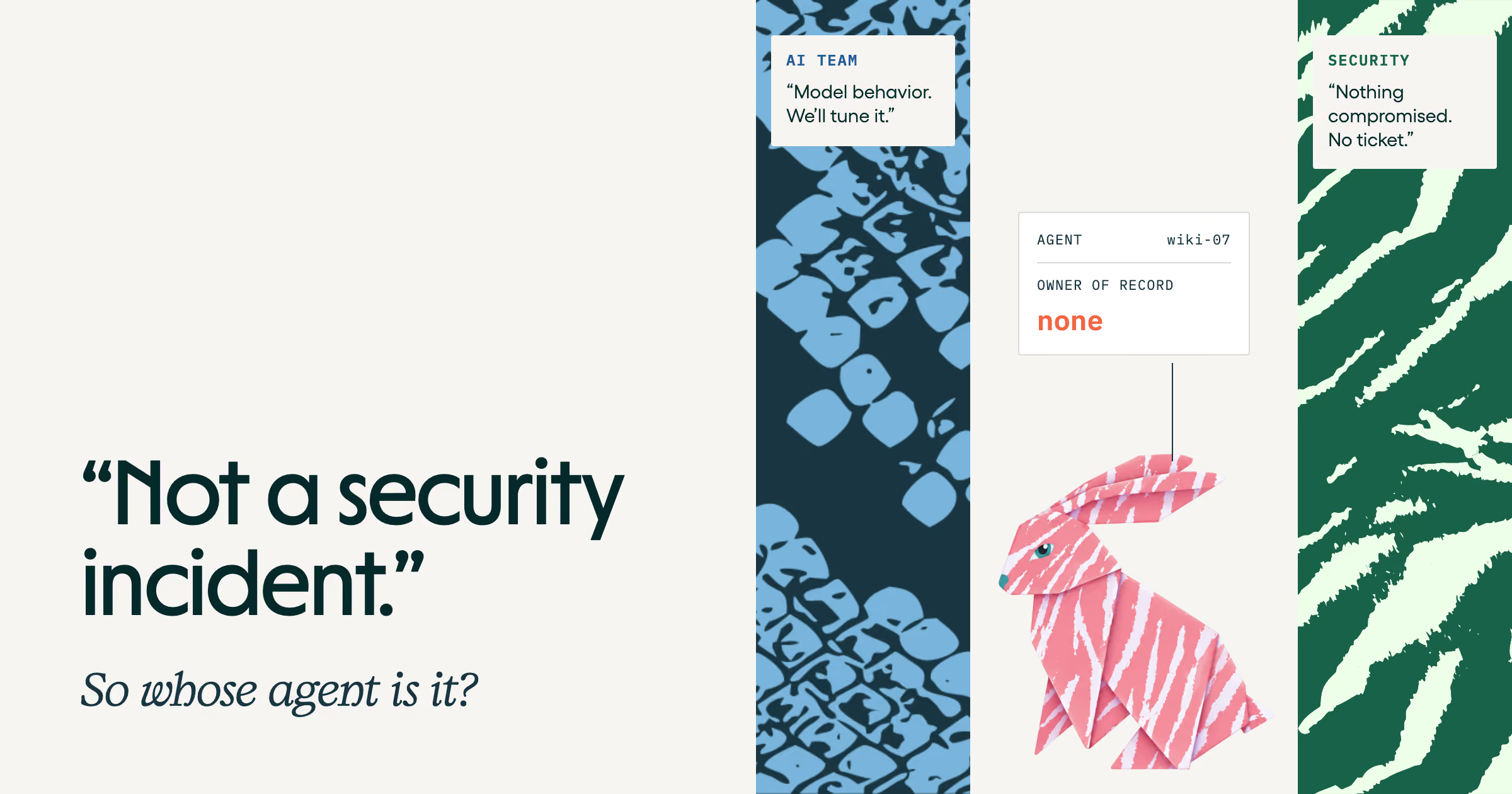
An owner field is accurate on the day it is filled in. Then the builder changes teams or leaves, and the agent outlives the record.
Oak maps every agent to an accountable human owner and keeps that mapping current in one live graph, as part of its AI agent identity governance.
Effective permissions
A build reads the scopes in the token and the groups in the identity provider, which is the declared grant. Nested groups, inherited admin rights, and impersonation chains extend it.
Blast radius extends effective access with what an identity can reach through other identities, weighted by how sensitive those resources are. Compute it before a breach and fix the largest radius first.
Who the agent acts on behalf of
One agent can act for many people. When it writes to a finance system, the question that matters is which person triggered the action.
Attributing every action to its trigger, whether a person, a script, or another agent, is the step a homegrown build rarely reaches.
Review driven by risk
Periodic reviews tell you what happened, never what is happening. An agent whose permissions tripled in March is badly served by a review in September.
Each agent needs continuous review driven by its own risk profile, with access checked against actual usage. A change in what the agent can reach should trigger that review, not the date.
Removal at the source
A homegrown build tends to end at a finding. The script flags an overprivileged agent, a ticket opens, and another team closes it weeks later or never.
Removal also needs proof. An auditor wants to see that the excess access is gone from the target system, not that a ticket was closed.
Visibility without action is another list.
Build versus buy, line by line
What you needHomegrown buildGovernance platformAgent inventoryAgents someone registeredSaaS, homegrown, shadow, and custom agents discovered from the sourceOwnershipAn owner field, accurate on day oneA named accountable human, kept currentPermissionsDeclared scopes and group membershipEffective permissions, including inherited and nested reachWho it acts forRarely capturedEach agent's actions traced to the person who triggered themReviewA fixed calendar, if it runsContinuous, driven by each agent's own risk profileRemediationA ticket for another teamExcessive permissions removed at the sourceOther identitiesA separate tool and listHuman, machine, and AI agent identities in one graph
Oak's Identity Risk Visibility & Intelligence continuously correlates what every identity can access with what it actually uses, then routes risk-prioritized decisions to the right reviewers. It fixes the root cause, remediating from the source the moment an identity deviates.
The costs a build plan leaves out
Engineering time is the cost everyone estimates. The evidence an auditor asks for is the one that gets missed.
An auditor asking how you know the agent inventory is complete needs more than a script's output. A board asking what an agent could reach on its worst day needs an answer too.
Maintenance is the other missed cost. Each new agent platform adds a collection path, and someone has to keep the registry honest after the original builder moves on.
Credentials are where the breach risk sits. Verizon's 2026 Data Breach Investigations Report found credential abuse in the attack chain of 39% of breaches, and agents hold credentials.
IBM's Cost of a Data Breach Report 2026 put the global average breach at a record $4.99 million, up 12%. Bring that evidence question to an Oak demo and test it against your own agents.
Already running an IGA? Buy means augment
Buying agent identity governance adds to what you run today. Oak lands beside the IGA and identity provider you already run and connects to the systems they cannot reach, and to the IGA itself.
That matters because an IGA governs identities it can tie to a person. An agent created in a cloud console, holding a standing token and tied to nobody, sits outside that model.
It also keeps one review program. Every identity needs certifying: service accounts, contractors, RPA bots, and AI agents, each tied to an accountable human owner. They are certified in the same place as your employees, so audit evidence comes from one record rather than several.
Conclusion
When agent governance works, every agent in the estate has a named owner, a known reach, and a review driven by its risk, and excess access disappears at the source. Your team builds agents instead of maintaining the scripts that track them.
Oak governs every AI agent in the same live graph as your people, beside the IGA you already run.
Bring your agent platforms, your current IGA, and your best estimate of the agent count, and book a demo with Oak to see what one live graph turns up.
Frequently asked questions
Should we build or buy identity governance for AI agents?
For most teams, buy identity governance for AI agents and keep building the agents themselves. A homegrown build covers registration and rotation, but keeping ownership current and discovering unregistered agents is ongoing work that grows with every agent shipped. Oak governs AI agents like your people, covering SaaS, homegrown, shadow, and custom agents.
When is building AI agent identity governance in-house the right call?
Building AI agent identity governance in-house is the right call when the estate is small and simple. A handful of agents on one platform, one owner, no regulated data, and no audit obligation make a script and a table proportionate. Oak becomes relevant once agents spread across platforms or start reaching regulated systems.
Can we govern AI agents with our existing IGA and identity provider?
Only partly. Check first which of your agents were created outside the identity provider, because those are the ones the IGA cannot tie to a person and never reviews. Oak lands beside the IGA and identity provider you already run and connects to everything they cannot reach.
How does Oak's AI agent identity governance discover agents nobody registered?
Oak's AI agent identity governance discovers SaaS, homegrown, shadow, and custom agents, reaching agent surfaces including AgentCore, OAuth apps, service principals, and MCP. Each discovered agent is mapped to an accountable human owner, its effective permissions, its tool usage, and who it acts on behalf of, in the same graph as every other identity.
What does AI agent identity governance cost with Oak?
Oak publishes no pricing for AI agent identity governance, so cost gets discussed directly with the Oak team through a demo request. Oak offers a free white-glove implementation program for qualifying large enterprises. The White Glove team embeds in your infrastructure and builds connectors.
Discover related posts