You Can't Govern What You Can't Connect
Every identity decision starts with the same question: who has access to what? Access reviews, risk scoring, least privilege and audit evidence all depend on the answer.
That answer is only ever as good as the systems you've connected. A system outside your IGA still gets governed, by hand, through spreadsheets, tickets and exports. It just never makes it into the picture your decisions rely on.
The blind spot is the integration backlog
Most enterprises already run an IGA, and their teams run it well. But an IGA governs what it's integrated with, and only the identities it can tie to a person.
The first integrations are usually the easy ones: the identity provider, the HR system, the big SaaS apps. Then the backlog starts. An on-prem application with no API. A homegrown system that lives on a database. Permissions granted directly inside an app, which never pass through a request. Service accounts, other non-human identities and AI agents that don't map to anyone in HR.
Each of these waits months to integrate, or never gets integrated at all. In the meantime, the team governs them by hand, and certifications, risk scores and audit answers still come from a partial picture.
Why coverage is a security problem, not a plumbing problem
For identity teams, a gap in coverage means decisions made without evidence. Reviewers can only certify what their tool shows them, and an access review that skips a third of the estate measures the review process, not the risk.
For security teams, the gap is the exposure. Attackers don't follow your integration roadmap. The application that never got connected, with a stale admin account nobody reviews, is exactly the door they look for.
AI makes this harder every quarter. Agents multiply across teams and platforms, each holding credentials, many of them owned by no one, and the identity estate is growing faster than any integration plan can keep up with.
Coverage isn't the last step of an identity program. It's the precondition for everything else.
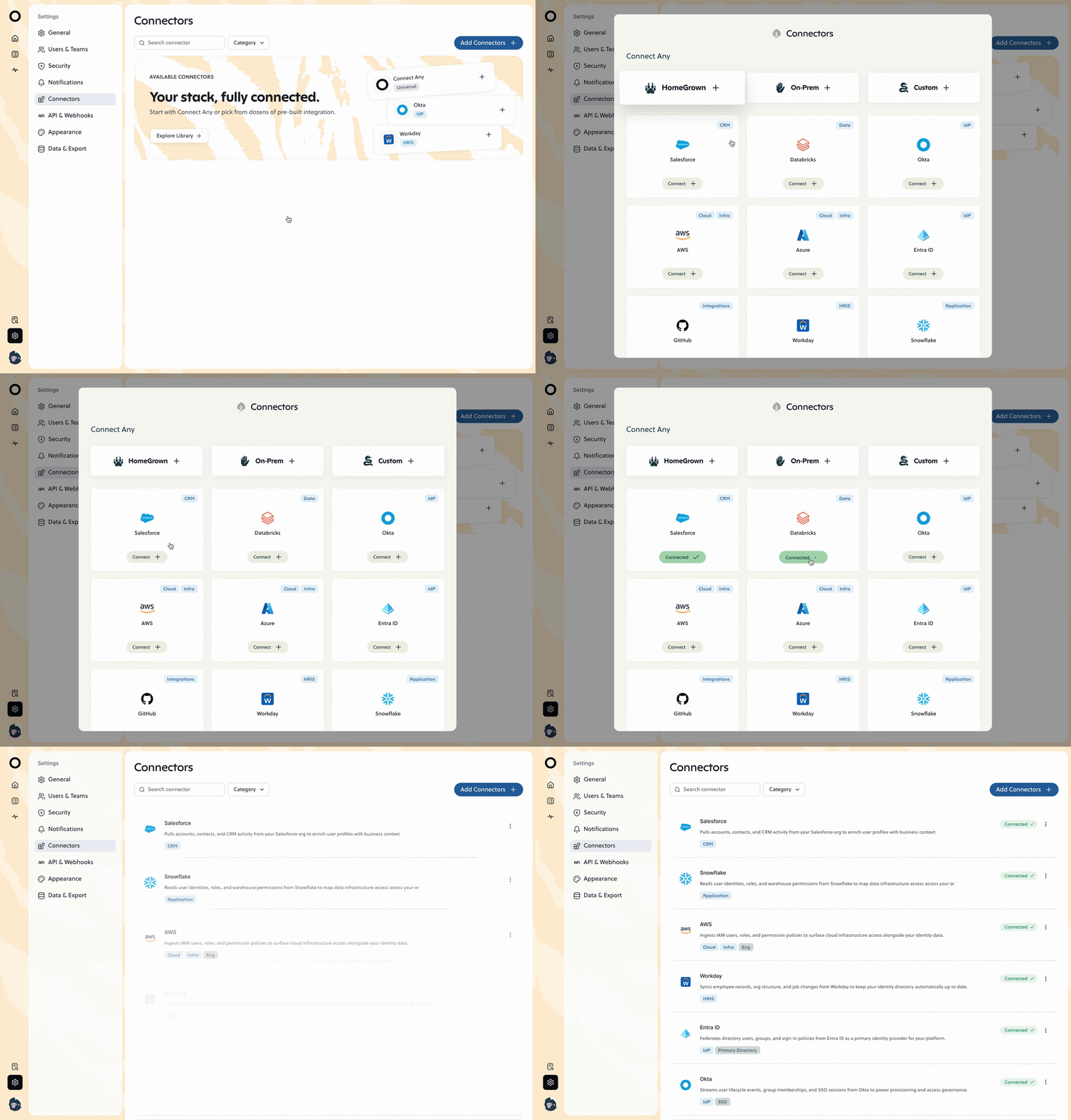
ConnectAny: every system, wherever it lives
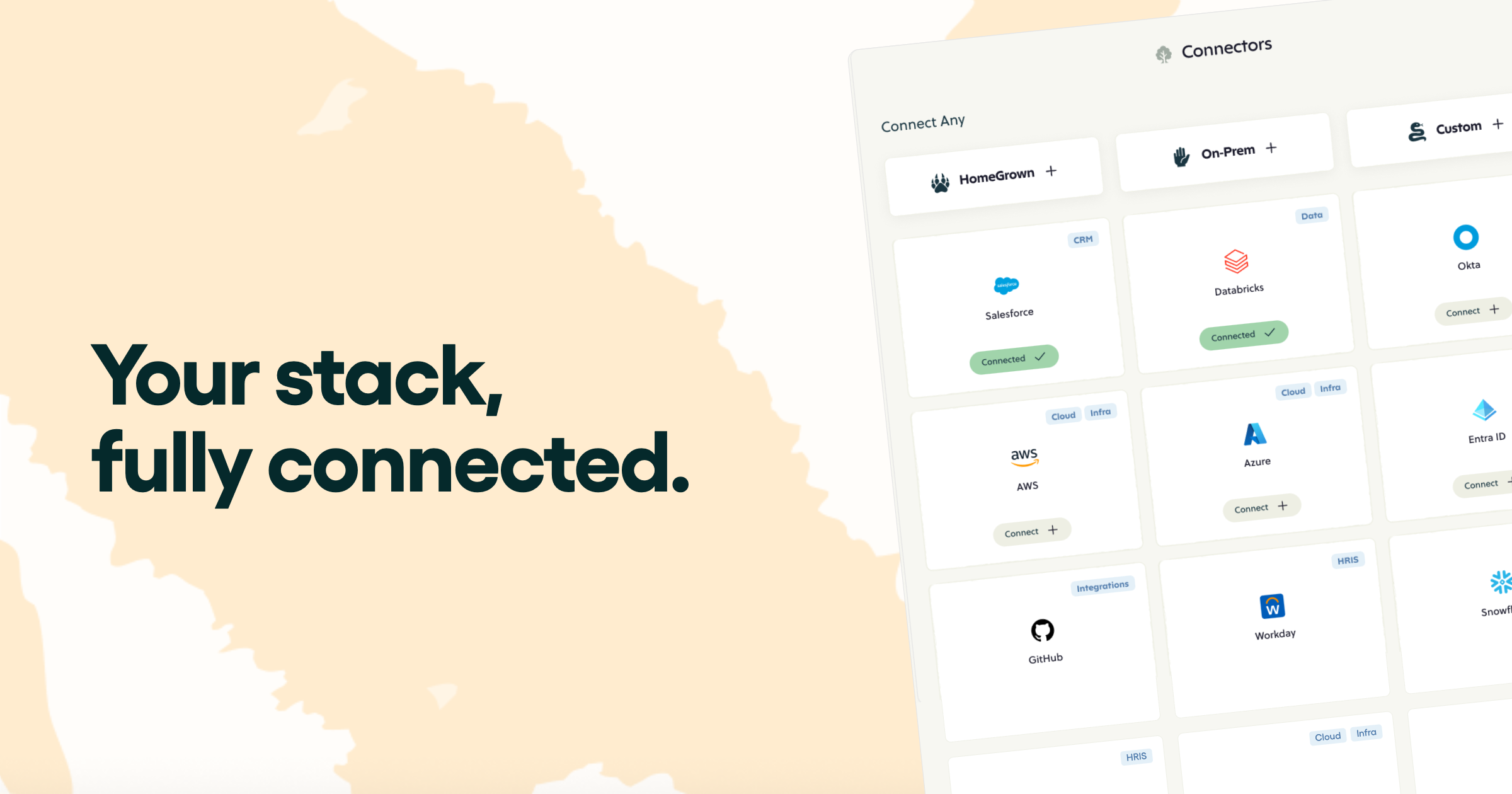
ConnectAny is Oak's AI-born connector engine. It's the first layer of the Identity Operating System, and its job is simple to state: bring every source of identity data into Oak, whatever it is and wherever it runs.
- Cloud and SaaS connect through out-of-the-box connectors.
- On-prem and VDI environments connect through an on-prem agent.
- Homegrown applications and databases connect over JDBC and ODBC.
- Systems with no API at all can be brought in by file upload.
- New connectors are built by the AI-born engine in days, not the quarter-long integration projects identity teams have learned to expect.
ConnectAny also connects to the IGA you already run. It becomes a source rather than a system to rip out, so the first day with Oak isn't a migration. It's a wider lens on the estate you already have.
Depth: not just who has access, but who should
Connecting to a system is only half the job. What you bring back from it decides what you can do next. For every source, ConnectAny works at four levels:
- Read: who holds what, in every system, including the entitlements granted out of band.
- Resource level: what each permission actually reaches, rather than what its role label says.
- Activity: what was actually used, and when.
- Write: the ability to downsize access and fix issues at the source, once a change is approved.
This depth is what makes Oak opinionated. With entitlements and activity side by side, Oak can tell the difference between access someone has and access someone needs, and that gap is where most identity risk lives. With write, a finding doesn't end as a ticket; it can end as a fix.
{{small-cta}}
What changes when everything is connected
Every identity, in one graph. Humans, service accounts and other NHIs, and AI agents, from every connected system, deduplicated and normalized into one live graph of who and what can reach what.
Reviews built on evidence. When every system is connected, a reviewer sees last use, sensitivity and context on every row, instead of approving a list of names.
Least privilege you can measure. Activity data turns least privilege from a policy goal into a number: what was granted, what was used, and what can be removed.
Fixes where the access lives. Recommendations can be applied in the target system itself, with your approval, rather than handed to someone else to close.
Beside the IGA you run. ConnectAny reaches what your IGA can't, and connects to the IGA itself, so nothing you run today has to change for you to see more.
Faster than a project
The real barrier to complete coverage has never been ambition. It's the integration project. That's why ConnectAny comes with Oak White Glove: a dedicated identity services team that builds connectors alongside you, including the on-prem and homegrown systems that never made the roadmap, and runs each step with you until Oak runs at full strength.
If you want to see what your identity estate looks like when nothing is left out, twenty minutes is worth your time.
Built for giants. Born complete.
Discover related posts